Baby hair: when does a newborn’s hair fall out
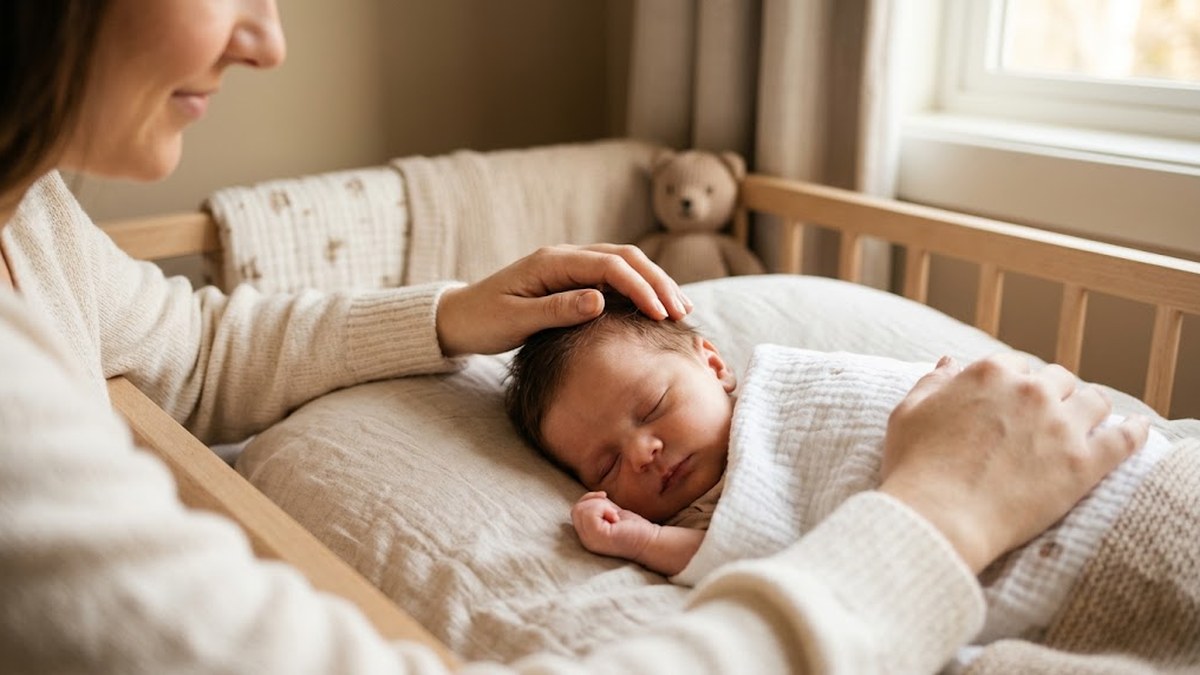
My daughter was born with a head full of dark hair, the kind that makes everyone jealous. People commented on it all the time. Around the second month, I started noticing strands on the pillow and inside her little cap, and her hair grew thinner at the top. I panicked inside and rushed to the pediatrician. She told me the sentence I have never forgotten: baby hair is like that, it grows, falls out, and comes back. In this article, I explain what I learned about this shedding, when it happens, and what is worth watching.


Why a newborn’s hair falls out
Inside the womb, the baby lives in a warm, protected environment. After birth, many things change at once, and hair is one of them. The hair the baby had at birth is usually finer, made for that phase. Over time, those strands fall out to make room for new hair, which grows according to the child’s genetics.
On top of that, there is a hormonal factor. During pregnancy, the mother’s hormones pass to the baby and help keep more strands in the growth phase. After birth, those hormones go away, and the hair tends to enter a natural shedding phase. It is similar to what happens to the mother with postpartum hair loss, although in the baby the process is very characteristic and temporary.
When it usually happens and how long it lasts
In most cases, shedding starts between the first weeks and the first months of life, and usually peaks around the second or third month. There is no fixed rule. Some babies are born nearly bald and start growing new hair right away, while others are born with a full head of hair and only swap out the strands later. What matters is understanding that it is a cycle.
The speed and timing vary from child to child. In general, after a few weeks of shedding, you notice new strands appearing, finer and lighter at first. This new hair may have a texture and color different from the hair at birth, and that is normal.
Shedding on top of the head draws attention
A very common pattern is shedding at the back and on top of the head, the area that rests against the surface when the baby sleeps. Because the baby spends many hours lying down, the friction with the mattress helps release strands that were already falling out. This shows up as a ring of thinner hair around the nape of the neck, and it often frightens parents, but it is expected at this age.
This pattern has nothing to do with a lack of care or the wrong product. It has to do with position and time spent lying down, which is exactly what a newborn needs.
It is also worth remembering that a baby who loses hair on top is not losing hair because of friction alone. The strand was already at the end of its cycle, and the position only speeds up what was going to happen anyway. That is why changing the baby’s position and doing some tummy time, always awake and supervised, helps with development and also gives that area a break.
Do not put adult products, medicine, or homemade remedies on your baby’s hair without guidance from the pediatrician. A newborn’s skin and scalp are very sensitive. If you are going to try anything, discuss it with the pediatrician first and do a patch test on the skin, remembering that a homemade product is no substitute for professional evaluation.
How to care for your baby’s hair during this phase
- Wash with warm water and a mild soap or shampoo made for babies.
- Use the smallest amount of product and rinse well.
- Do not rub hard. Use your hand or a soft towel, without friction.
- Do not tie the hair tightly or use tight caps that pull on the strands.
- Let the scalp breathe, without tight hairstyles.
- As for how often to wash, the same logic as adult hair applies: less is more. See how often to wash your hair.
When to talk to the pediatrician
Most of the time, the shedding is normal and resolves on its own. See the pediatrician if you notice large, sudden bald patches, flaking skin, redness, small sores, itching, or spots on the scalp. It is also worth talking if the shedding drags on for many months, if the baby is very uncomfortable, or if anything worries you. The pediatrician is the right person to evaluate the baby.
And if hair loss is happening to you, mom, know that postpartum hair loss exists and that it has an explanation. Many people look for homemade recipes for hair loss, but the ideal is to understand the cause with a professional before trying things out.
Frequently asked questions
Does newborn hair really fall out?
Yes, very often. The hair a baby is born with is usually replaced by new hair over the first months. It is not a disease or a sign of a problem.
Should I use tea or homemade oil to hold my baby’s hair?
It is not recommended without guidance from the pediatrician. A baby’s skin is sensitive, and a homemade product is no substitute for professional evaluation. If you are going to try something, do a patch test and talk to the doctor first.
Can you predict what your baby’s hair will look like?
You cannot predict it from the amount of hair at birth. The final hair depends on genetics and is only defined as the child grows. Color and texture can change a lot over time.
Watching your baby’s hair change tugs at your heart, but it is just a transition phase. Care for it gently, observe, and let nature follow its own pace. When in doubt, the pediatrician is there to take the weight off your shoulders.
Ferramentas grátis para esta fase
- Calculadora de idade gestacional e data do parto Descubra em quantas semanas você está e a data provável do parto.
- Contador de contrações (trabalho de parto) Cronometre a duração e o intervalo das contrações.
- Calculadora de IMC (e ganho de peso na gravidez) Calcule o IMC e veja a faixa de ganho de peso de referência.