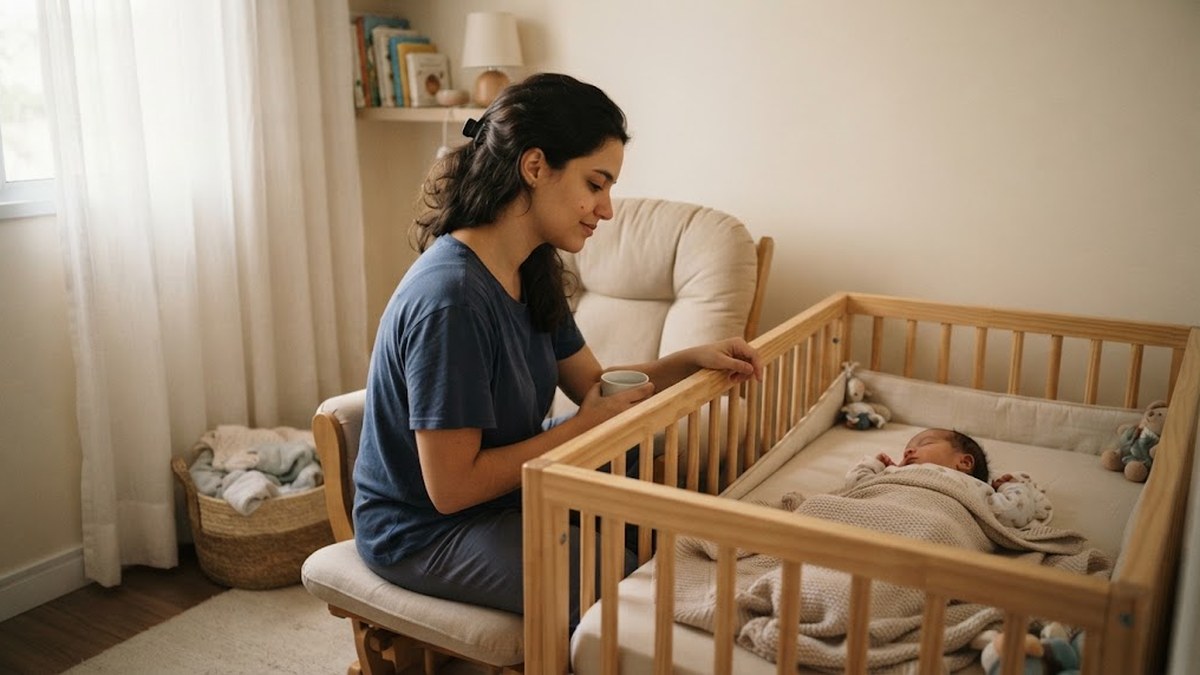
Baby who only sleeps in your arms: how to make the transition

If your baby only sleeps in your arms and wakes the second you try to put them in the crib, know that you are not alone. I spent months with my baby glued to me, sleeping in short blocks and with arms numb from holding so much. Understanding why this happens was the first step to making the transition without a scare and without a fight.


Why the baby only wants your arms to sleep
In the first months, being held is not indulgence. It is the way the baby has of feeling protected and regulated. They came from a warm place, with constant sound and movement, so a mother’s arm reproduces that original environment. Being held activates in the baby the feeling of safety that helps the body slow down and fall asleep.
The baby’s light sleep also comes into play. When they fall asleep in your arms and are placed in the crib, the change in temperature, support and smell can wake them. It is not being fussy, it is the body reacting to the change of scene right in the middle of sleep.
It is worth remembering that this need is greater in the first months and tends to decrease as the baby grows and gains confidence. What helps in this period is offering comfort without guilt and, at the same time, gradually presenting the crib as a safe place, without breaking the bond overnight.
When the transition stops being optional
There comes a moment when constant holding weighs, whether because you went back to work, because the night turned into a series of rescues, or because your arms and back are asking for help. Making the transition does not mean taking your arms away from whoever needs them. It means teaching the baby, little by little, that the crib is also a safe place.
The best moment is usually when the baby already has a minimal sleep rhythm and is not going through strong developmental spurts. Phases like the 4-month sleep regression make any baby more clingy, and it is not the time to change everything at once.
Signs that it is a good time to start
There is no right stopwatch, but a few indicators show that the baby is ready to take the first steps:
- the baby already sleeps some longer blocks, even if in your arms;
- daytime naps have more or less predictable times;
- crying calms easily and they regulate themselves with support;
- you are in a position to try calmly, without needing to solve everything at once;
- the baby is not in a growth spurt nor sick at the moment.
If most of these points make sense, it is a good time to try. If you are in the middle of a difficult phase, postpone it and come back later.
Step by step to take the baby out of your arms and into the crib
Go slowly and change one thing at a time. One possible path:
- Start with the naps. It is easier to train crib sleep during the day, when the baby is less tired and the pressure is lower.
- Lay them down drowsy, not asleep. Put the baby in the crib when their little eyes are still open, but relaxed. That way they learn to fall asleep there.
- Stay nearby. Do not leave right away. Keep your hand on their back and speak softly until they calm down.
- Increase the minutes. Each day, move your hand a little further away and reduce the contact time, always slowly.
- Respond to crying with comfort. If they cry, pick them up, calm them and try again. It is not a failure, it is part of the process.
A practical tip: create a fixed signal, like a cloth or a small blanket that is always with you before going to the crib. The familiar smell works as a bridge between your arms and the crib. Another help is warming the sheet for a few minutes before laying them down, removing the heat pack first, and keeping the same soft music in every attempt.
How to deal with setbacks
There will be days when the baby wins the battle and sleeps in your arms again. This is normal and does not erase what has already been built. On difficult nights, prefer comfort over method. The goal is not to win every night, it is to show the baby, repeatedly, that the crib is also safe.
It is also worth investing in the environment before demanding results. A well prepared room for sleep, with low light, constant noise and mild temperature, makes the transition pay off much more. And when the baby already accepts the crib for naps, you can bring the same logic to the night, as in the text on making the baby sleep alone in the crib.
Frequently asked questions
Does letting the baby sleep in your arms create bad habits?
No. In the first months, being held is a developmental need, and not a habit that spoils. Offering comfort helps the baby regulate. The transition can be done gradually, later, with no guilt about the time they spent in your arms.
Do I need to leave the baby crying in the crib?
You do not. You can stay close, offer your hand, your voice and touch until they calm down. Leaving the baby crying alone without support is not a requirement for learning to sleep, and comfort during the transition is welcome.
How long does the transition take?
It varies a lot from baby to baby. Some adapt in one or two weeks, others take longer and swing between good days and difficult days. The rhythm matters more than the rush, and setbacks are part of the process.
Trading your arms for the crib is work of patience and affection, not of force. The baby learns at their own pace, and every step counts. This content does not replace the appointment with the pediatrician. If there is any doubt about the baby’s sleep, breathing or weight gain, always seek a professional who follows your case closely.
Ferramentas grátis para esta fase
- Calculadora de idade gestacional e data do parto Descubra em quantas semanas você está e a data provável do parto.
- Contador de contrações (trabalho de parto) Cronometre a duração e o intervalo das contrações.
- Calculadora de IMC (e ganho de peso na gravidez) Calcule o IMC e veja a faixa de ganho de peso de referência.