Starting solids: what to offer and when, by age
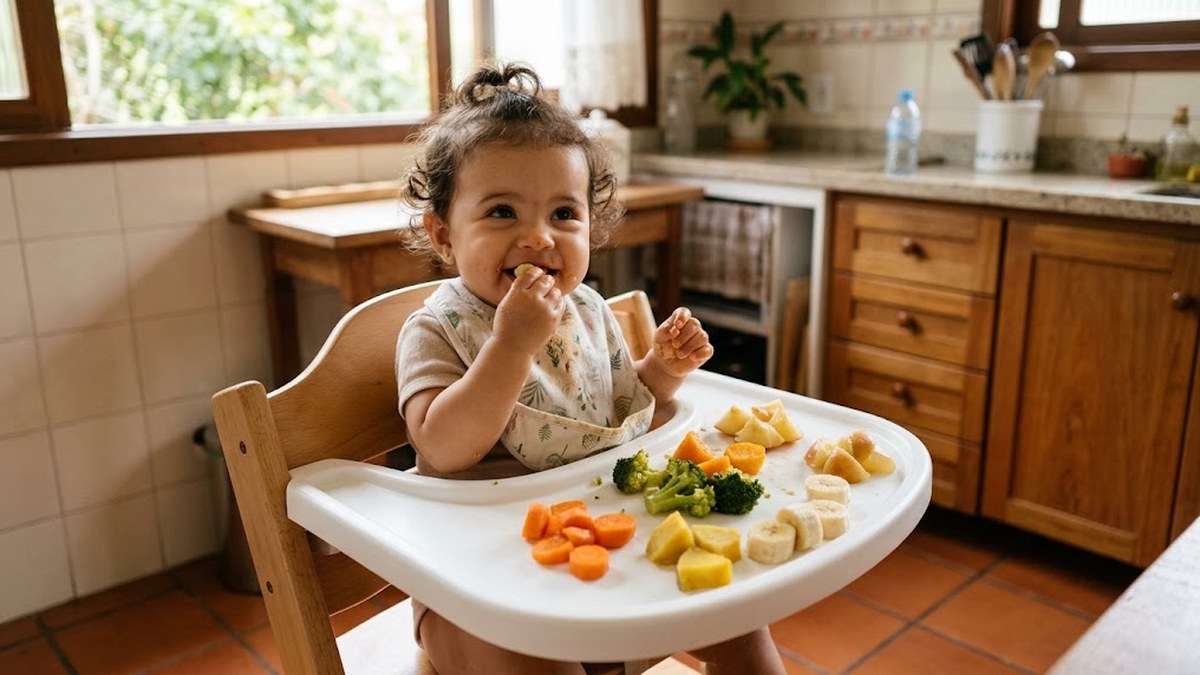
Starting solids marks the moment your baby begins to discover the world through food. It is a phase full of expectation, but also of questions about when to begin, what to offer and how to avoid choking. I’ll guide you through the main points, with what is usually recommended by age and how to build a safe, varied plate.


When to start solids
The widely adopted recommendation is to begin around six months, keeping breast milk or formula as the base of the diet. Before that, babies are usually not ready, either from a digestive or a motor point of view.
More important than the date on the calendar is watching for the readiness signs, which usually appear together:
- Sits with support and holds their head up well.
- Has lost the reflex of pushing food out with the tongue.
- Shows interest in what adults are eating.
- Can grab objects and bring them to the mouth.
If your baby was born premature, the corrected age is usually taken into account, and your pediatrician is the one who will advise the best moment for your case. There is no point in starting early out of anxiety or delaying without a reason, because your baby’s body gives the clues.
What to offer first
Order matters less than variety over time. In general, you start with mashed foods or soft pieces, always natural and well prepared.
- Vegetables: pumpkin, carrot, sweet potato, chayote, broccoli and beetroot, well cooked.
- Fruits: banana, papaya, avocado, pear and mango, mashed or in soft strips.
- Grains and tubers: rice, oats, potato and cassava, introduced little by little.
- Proteins: meat, egg and beans, well cooked and shredded, as advised.
At this stage, it is best to avoid sugar, excess salt, ultra-processed foods, honey before one year, and foods with a high choking risk, such as whole grapes and whole nuts. Natural seasonings like garlic, onion and herbs help the food taste good without needing much salt.
How to build your baby’s plate safely
A balanced plate usually combines food groups, varying throughout the week. A few practices help reduce the risk of choking and make the meal calmer:
- Offer the baby seated, with their back straight and feet supported.
- Cut the food into safe shapes, such as strips the size of a fist so they can hold them.
- Cook until soft enough to mash between your fingers.
- Never leave the baby eating without an adult supervising.
- Start with small portions and respect their appetite, without forcing.
It is not unusual for a baby to reject a food the first time and accept it later. Repetition, without pressure, is part of the learning. It is also normal for the amount to vary from one day to the next.
Practical tip: offer a new food together with one your baby already likes, in the same meal. This reduces resistance and expands their repertoire little by little. And eat the meal together with your baby, because they learn a lot by watching adults eat the same foods.
What changes by age
The pace varies from baby to baby, but there is a general line that usually guides the phases:
- From 6 months: the start of solids, with mashed foods and soft pieces, keeping milk as the base.
- Around 8 to 9 months: the baby gains more steadiness to pick up pieces with their hand and chewing improves.
- Close to 1 year: real food takes up more space, and they already join the family meal with adaptations.
- After 1 year: the family’s diet is the base, with adjustments to seasoning and cutting, and milk continues as a complement.
This transition goes hand in hand with the gradual end of feedings, and understanding how to do gradual weaning helps you organize both changes without a scare. In this phase, milk still plays an important role, and it is worth reviewing how to keep feedings throughout the day in the content about a baby who nurses all the time, to adjust both routines together.
Common mistakes at this stage
Some stumbles appear often and almost always have a simple solution:
- Forcing the baby to eat when they have already signaled they are full.
- Always offering the same foods and reducing variety.
- Using food as a reward or a punishment.
- Distracting the baby with screens during the meal.
- Comparing how much your baby eats with another child’s.
Another frequent question is how to combine food and the breast. Breastfeeding remains an important part of this stage, and it is worth rereading the basic care of breastfeeding in the first days to remember the signs that a feeding is going well, even with a busier routine.
Frequently asked questions
My baby rejects food, what should I do?
Rejection is common at the start. Offer the food again on other days, without forcing, and pair it with something they already accept. Acceptance comes with repetition and a calm environment, without stress at mealtime.
Can I keep breastfeeding while starting solids?
Yes. Milk remains important at this stage and the general recommendation is to keep it as the base while food gains space. The order between breast and meal can be adjusted to each family’s routine.
Do I need to start with purees?
There is no single way. Mashed foods and soft pieces handed to the baby are valid paths, as long as they respect safety and the baby’s stage. The best method is the one you can follow safely and consistently.
Starting solids is a discovery, not a performance test. Offer variety, respect your baby’s pace and keep the environment calm. These guidelines are general and do not replace a visit with the pediatrician, who will assess your baby up close.
Ferramentas grátis para esta fase
- Calculadora de idade gestacional e data do parto Descubra em quantas semanas você está e a data provável do parto.
- Contador de contrações (trabalho de parto) Cronometre a duração e o intervalo das contrações.
- Calculadora de IMC (e ganho de peso na gravidez) Calcule o IMC e veja a faixa de ganho de peso de referência.